
About Slitherlink
Slitherlink is a logic puzzle where the challenge is not speed or guessing, but careful deduction. Every puzzle has a single valid solution that can be found using logic alone.
At first glance, Slitherlink may look simple, but larger boards quickly become complex. The key is learning how different numbers interact and how local decisions affect the loop globally.
Understanding the Clues
Each numbered cell tells you how many of its four sides belong to the loop:
0 means none of the surrounding edges are part of the loop
1 means exactly one edge is used
2 means two edges are used
3 means three edges are used
Numbers do not tell you which edges are used directly — only how many. The puzzle is solved by gradually eliminating impossible edges and forcing the correct ones.
Core Logic Rules
Some fundamental rules apply to every Slitherlink puzzle:
The loop must be one single continuous loop
The loop cannot cross itself
There can be no branches or loose ends
Every grid point connects to either 0 or 2 lines
Multiple small loops are not allowed
Keeping these rules in mind helps prevent mistakes early.
Practical Solving Tips
Start with the easiest clues first:
0-cells are immediate: all four edges must be marked with X
3-cells are strong clues: only one edge can be an X
Clues on corners and edges of the board often force early decisions
Watch the grid points:
If a point already has two connected lines, all other edges touching that point must be X
If a point has one line, it must eventually get a second line
Avoid closing loops too early:
Creating a small closed loop before the puzzle is finished will always lead to an invalid solution
Leave openings until you are sure the loop must close
Use X-marks actively:
Marking impossible edges is just as important as drawing lines
X-marks reduce options and reveal forced moves
Difficulty and Board Size
Smaller boards are great for learning patterns and basic logic.
Larger boards require planning ahead and tracking how different parts of the loop interact.
Harder puzzles do not rely on guessing — they require combining multiple logical deductions across the board.
🔹 Slitherlink Pattern Gallery – Core Logic Patterns
🧩 Slitherlink Logic Patterns
Slitherlink puzzles are solved by recognizing small, local patterns that force certain edges to be either part of the loop or impossible.
Learning these patterns makes larger boards much easier to solve without guessing.
Below are some of the most important Slitherlink patterns used by experienced players.
🔢 The 0-Cell Pattern

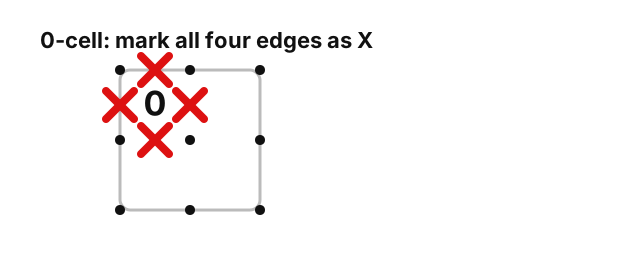
A cell with a 0 means that none of its four edges can belong to the loop.
All surrounding edges must be marked with X
This is often the best place to start a puzzle
Zeros immediately eliminate many possibilities
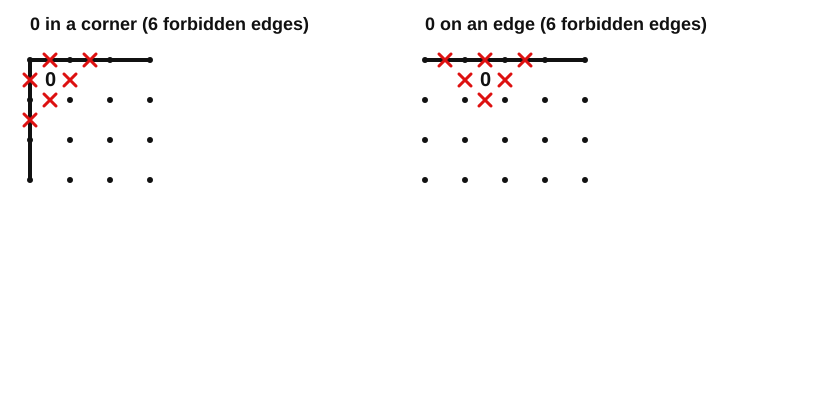
When a 0 is placed in a corner, six edges are impossible and must be marked with X.
All four edges around the 0 cell are X
The two adjacent outer edges along the board boundary are also X
When a 0 is placed along the outer edge of the board (but not in a corner), six edges must be marked X.
All four edges around the 0 cell are X
The two neighboring edges along the board boundary are also X
🔢 The 3-Cell Pattern
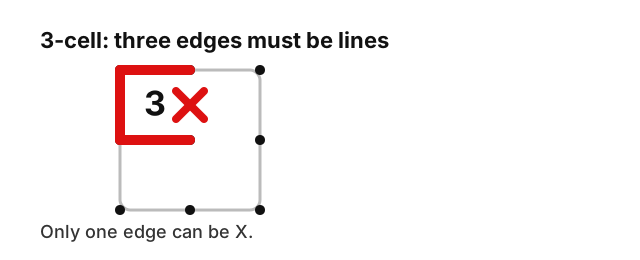
A cell with a 3 means that three of its four edges must be part of the loop.
Only one edge can be an X
Once one edge is blocked, the remaining three are forced
3-cells create strong constraints early in the puzzle
🔗 0 Next to 3
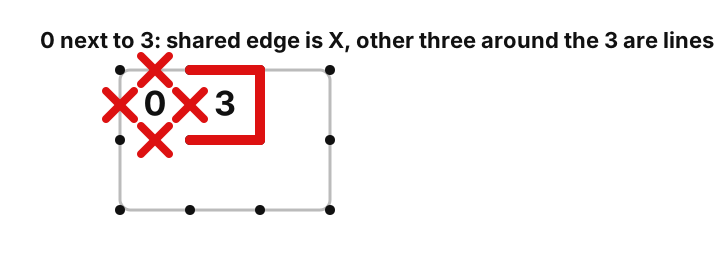
When a 0 cell is directly adjacent to a 3, the placement of the loop becomes highly constrained.
Edges next to the 0 cannot be used
This often forces the loop to wrap around the 3 in a specific way
This pattern frequently appears near edges and corners
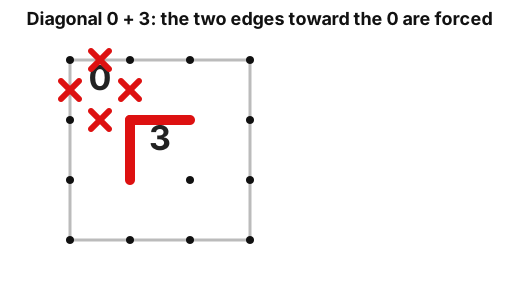
Diagonal 0 and 3
When a 3 is placed diagonally next to a 0, the two edges of the 3 facing the 0 must be lines.
This is forced by the 0 eliminating all adjacent edges and leaves the 3 with only one valid configuration.
🔢 Two 3s Side by Side
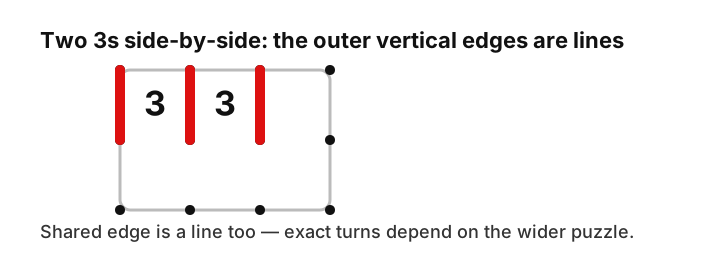
Two 3-cells next to each other force the loop regardless of its global direction.
Certain edges must always be lines
This pattern is extremely reliable
Spotting it early can unlock large areas of the board
🔢 Two 3s Diagonally
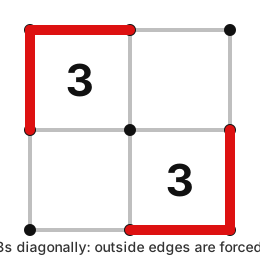
When two 3 clues touch diagonally, certain edges are forced regardless of the rest of the board.
For the upper-left 3, the top and left edges must be lines
For the lower-right 3, the bottom and right edges must be lines
These forced edges come from each 3 needing three sides, while still respecting the 0-or-2 rule at every grid point
The loop is not closed here — it must continue through the puzzle
This pattern constrains the loop’s direction without creating branches or premature loops.
📍 Corner Rules
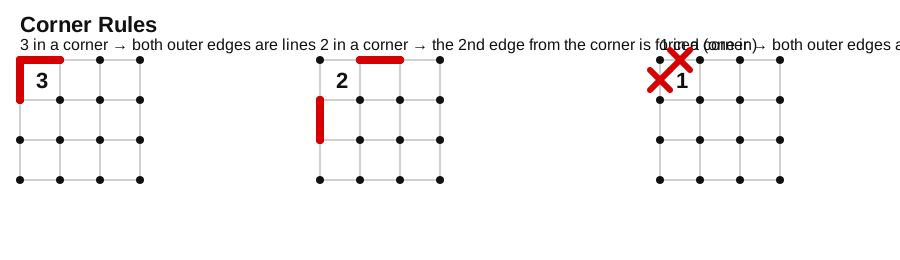
Cells placed in corners behave differently due to fewer available edges.
3 in a corner: the two available edges must be lines
2 in a corner: the second edge from the corner must be a line in both directions.
1 in a corner: both edges must be X
Corner patterns are easy to miss but very powerful.
🔗 The Node (Dot) Rule

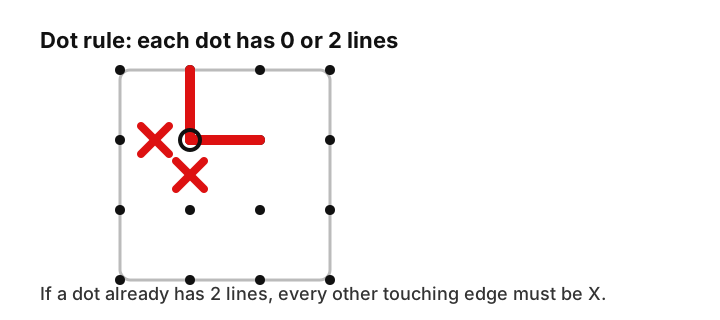
Every grid point (dot) must connect to either 0 or 2 lines.
If a dot already has 2 lines → all other edges must be X
If a dot has 1 line → it must eventually get a second line
This rule prevents branches and loose ends
🚫 Avoid Small Loops
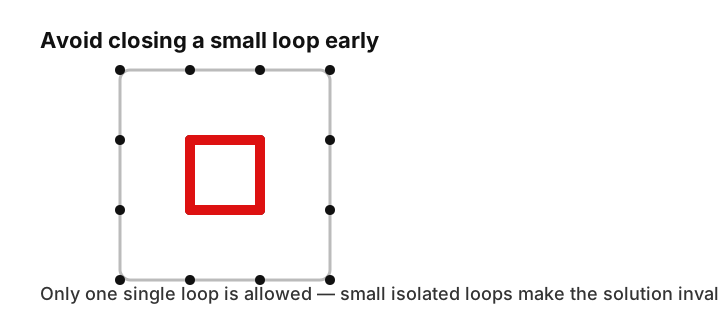
Creating a closed loop before the entire puzzle is solved is not allowed.
Only one single loop is permitted
Small isolated loops always invalidate the solution
Keep openings until you are certain the loop must close
🧠 Why Patterns Matter
Slitherlink is not about speed or guessing.
Every correct move is logically forced
Patterns reduce complexity
Large puzzles are solved by combining many small deductions
Mastering these patterns is the key to solving harder boards with confidence.
🔍 Want More Puzzles?
Looking for more brain-training challenges?
Browse our Free online puzzle & logic games collection.
Why Slitherlink Is a Pure Logic Puzzle
Unlike many puzzle games, Slitherlink does not depend on probability or trial and error. Every correct move is logically forced by the clues and rules.
That makes Slitherlink ideal for players who enjoy:
logical reasoning
pattern recognition
step-by-step problem solving
calm, focused gameplay
Whether you play a quick 7×7 puzzle or a challenging 20×20 daily board, Slitherlink rewards patience and clear thinking.
Explore More Logic Games
Looking for more brain challenges? Try our other free online logic games:
- Tents and Trees– Place tents next to trees while matching row and column clues. Tents cannot touch each other.
- Play Connect Four Online
- 9×9 Sudoku– Classic number puzzle with timer and leaderboard.
- Numberlink Puzzle – Connect matching numbers without crossings.
- 2048 – Slide tiles across the board and combine matching numbers to reach the 2048 tile in this classic puzzle game.
- Double Match – Match identical numbers or pairs that add up to 10 to clear the board. A relaxing logic puzzle with streak bonuses and daily challenge
- 🀄 Play Mahjong Solitaire Online
Match handcrafted Mahjong tiles, clear the board and
enjoy Classic Mode, Daily Challenges and relaxing puzzle gameplay.
Browse all our puzzle and logic games in the
Logic Games category